
The hardest part of geopolitical analysis is deciding what actually matters. In the digital age, lack of information is no longer the problem it once was. In Three Days of the Condor, Robert Redford’s life as a CIA analyst consists of sifting through stacks of incoming cables, searching for the one nugget of information that might change the world. Today, the challenge is the opposite: determining what deserves attention in an age of informational excess. Something is always happening. One can disappear down a rabbit hole of headlines, constantly “keeping up.” But when something is always happening, nothing is happening. Attention spans are finite, even if information is ubiquitous and nonstop.

The number of developments that truly matter in any given year is surprisingly small. As an exercise, look at the front page of your newspaper of record for every day this year and ask a simple question: Will anyone remember this headline in five years? It is shocking how rarely the answer is yes. And yet newspapers must fill the front page, just as analysts must produce output to remain visible. Attention, clients, and clicks reward activity, not restraint—even when restraint is precisely what good analysis requires. Five reports a year feels insufficient, almost irresponsible. The right five reports are worth their weight in Bitcoin.1
All of which is a wind-up to say: Last week, something happened in geopolitics that really mattered, something that made headlines for about 24 hours but has already fallen out of the news cycle, pushed back by the grisly shootings at Bondi Beach and Brown University and the latest update in the U.S. trying to telling Ukraine what to do. (I have been champing at the bit to write about this for a week, but I was on the road giving 5 speeches last week and so didn’t have a minute to sit and write until now.)
The news? Last Wednesday (Dec 10), Mexico’s senate approved a bill to raise tariffs to as high as 50 percent on cars, steel, and other goods from China, India, and other Asian countries with which it lacks a trade agreement.2 Mexican President Claudia Sheinbaum insisted that “the measures aren’t aimed at China—that’s very important—they are aimed at countries with which we don’t have a trade agreement” — but methinks the lady doth protest too much. From a certain point of view, one could make the case the real target is Washington, and that China, India, and others are just collateral damage…but that is a ultimately a distinction without a difference.
The passage of the bill was not a foregone conclusion, despite Morena’s de facto supermajority in Mexico’s legislature. Mexico’s Economy Ministry first outlined the proposed tariffs in September but the initiative struggled to gain widespread support in Congress and led to the government scaling back on the tariff increases. According to Reuters, at the end of November, Sheinbaum met privately at the National Palace with allies and legislators from Morena and urged them to finalize the bill before the end of the current congressional session (which is today).
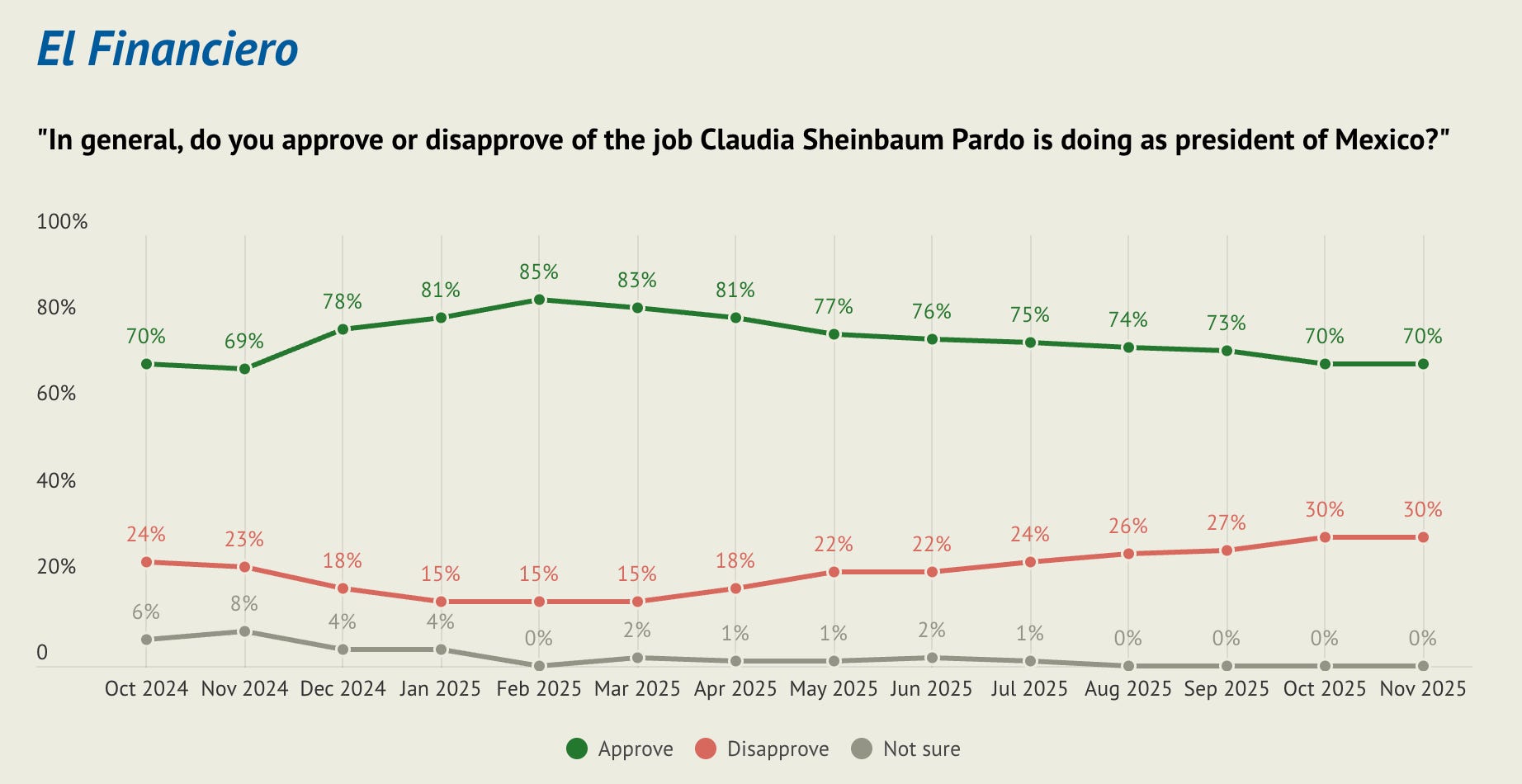
Based on what eventually passed, not much was watered down — the bill imposes between 5% and 50% on more than 1,400 categories of products beginning in January.3 The Mexican government insists the tariffs won’t add much to inflation (it projects 0.2%) because they only impact ~8 percent of Mexico’s total trade…but that’s assuming there is no retaliation with the Asian countries targeted by the move. The bill’s passage also underscores the extent of President Sheinbaum’s power. Even with the recent (small) dips in her approval ratings and the breathless and sensationalist reporting about Gen Z protest in Mexico,4 ~70% of Mexicans approve of the job she is doing. (The most interesting thing about her approval ratings is the conversion of the “not sures” to “disapproval” — it’ll be interesting to see if these tariffs moves the needle more.)
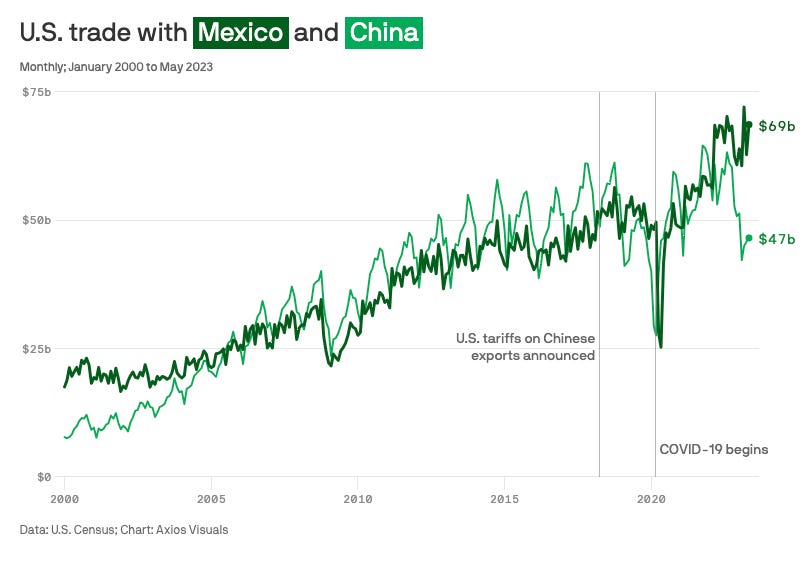
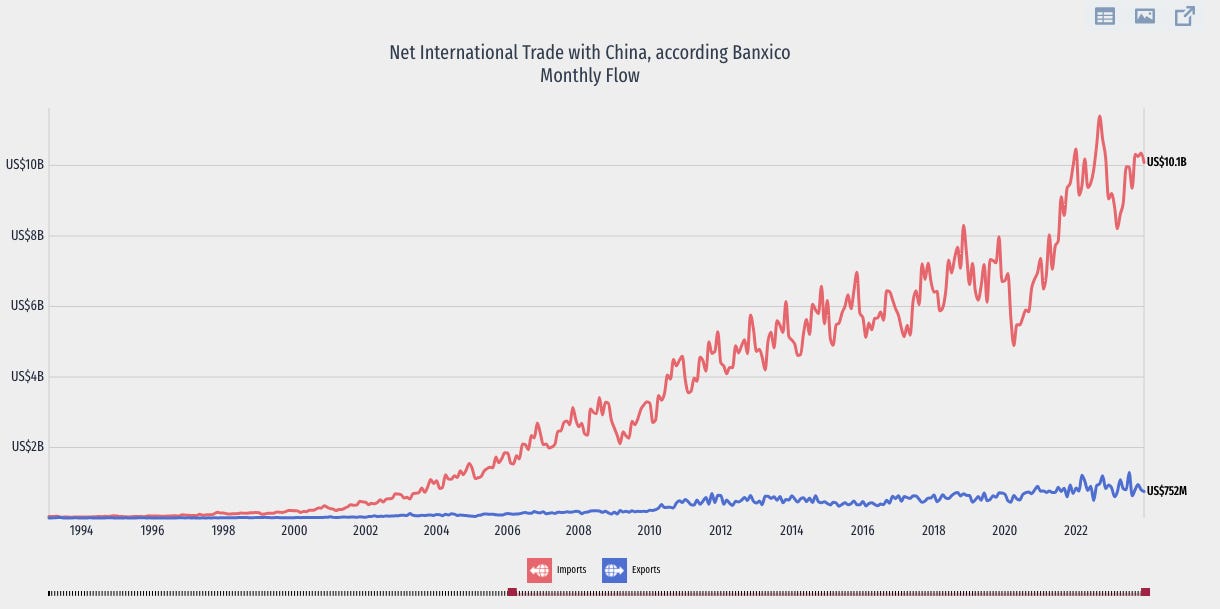
This is a stark about-face from the Mexican government, which in 20135 announced a Comprehensive Strategic Partnership launched by Presidents Enrique Peña Nieto and Xi Jinping. To be fair, Mexico never signed up for the Belt and Road Initiative or joined the Asia Infrastructure Investment Bank, so it has always hedged its bets on China, but even so, successive Mexican governments came to see China as the only potential counterweight to the country’s overwhelming economic dependence on the U.S. For its part, China has looked to deepen its relationship with Mexico for years.6 Even under the AMLO government, China loudly and often touted the strategic import of the relationship in recent years.7 Now, Mexico is effectively doubling down on the U.S. Mexico benefited considerably from the U.S.-China trade war, becoming a key transshipment point for Chinese goods into the U.S. In 2023, U.S.-Mexico trade surpassed U.S.-China trade…in large part because Chinese goods were coming into the U.S. via Mexico. As the 20th century Mexican dictator Porfirio Diaz is purported to have said, “Poor Mexico, so far from God, so close to the United States.”
It is also a major economic policy about-face. During the latter half of the 20th century, the ruling Partido Revolucionario Institucional (PRI) embarked on a policy of import substitution industrialization (ISI). ISI “promoted domestic industrialization via import barriers in order to bolster domestic industry and improve the terms of trade between Mexico and the U.S.”8 ISI didn’t work well for Mexico, which in the 1980s experienced a “lost decade,” triggered in August 1982 when Mexico declared it couldn’t service its massive foreign debt. This led to severe peso devaluations, crippling poverty, and austerity measures.
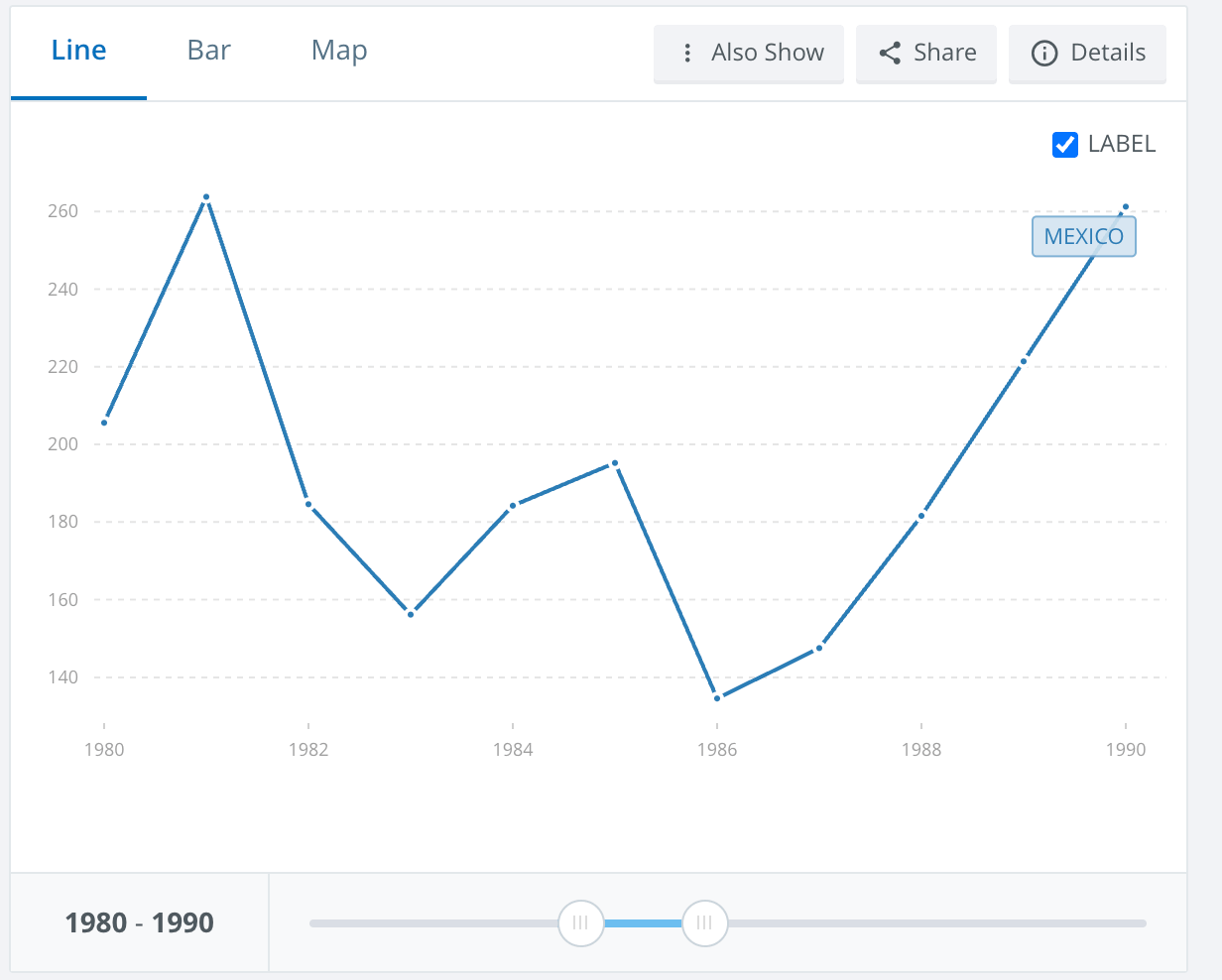
Mexico emerged from this crisis in the early 1990s by enthusiastically signing onto NAFTA, in effect leaving behind protectionist ISI-type policies for free trade and neoliberal policies. Mexico is implicitly adopting ISI again — for much different reasons, this time, to be sure — but the reasons don’t ultimately matter. That Mexico is doing this amidst potential democratic backsliding also “rhymes” with increased PRI power in the 1960s and 1970s. From 1934-1994, Mexico leaned to the left. To Morena, this was a de facto golden age, characterized by the strong presence of the state in the economy, including a state monopoly over strategic sectors, protectionist trade policies, and investments in infrastructure. From 1994-2025, Mexico veered in the opposite direction, embracing free trade. Now begins a new era.
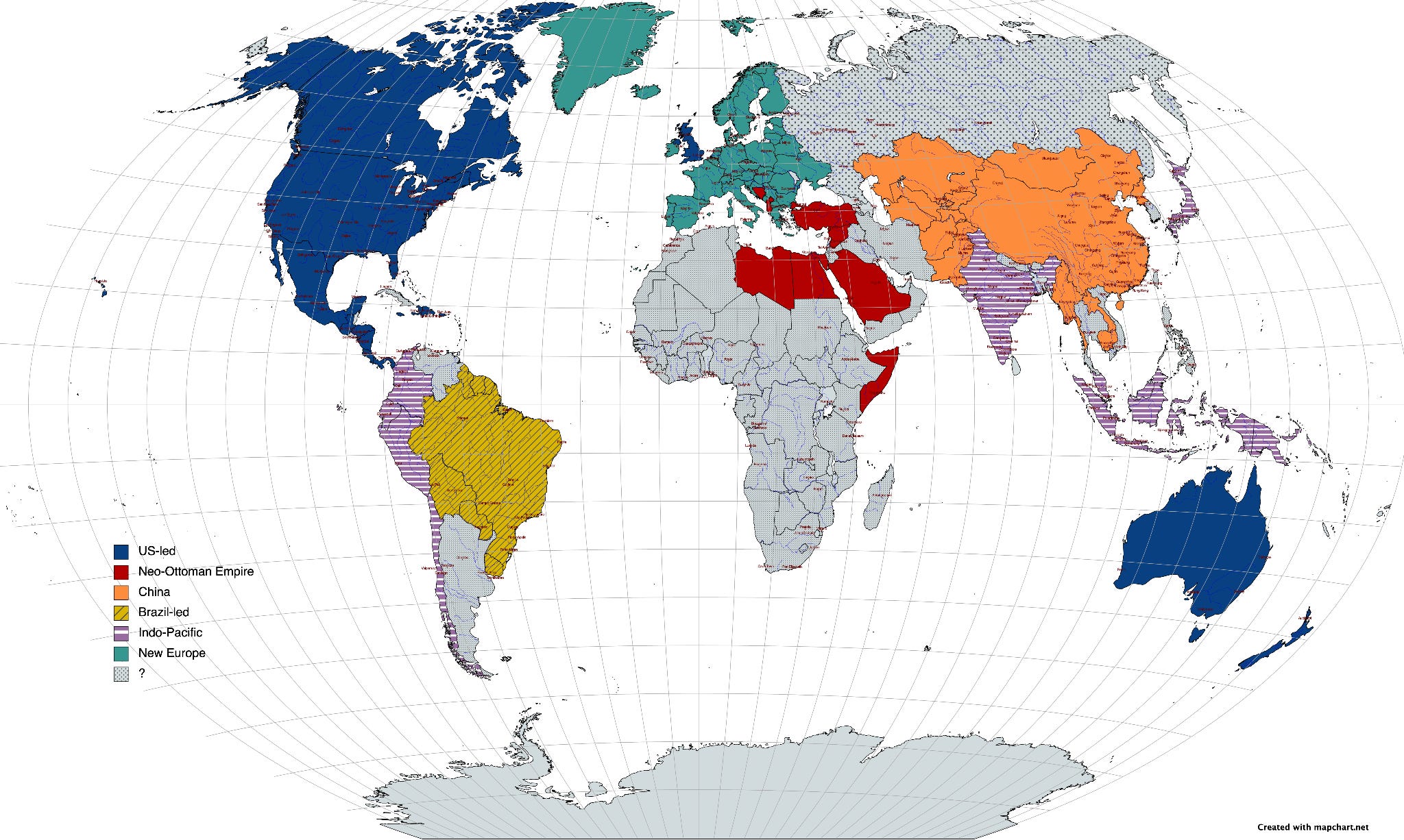
Lastly: This is about as clear a confirmatory signal as you’ll get for geopolitical multipolarity. Quick reminder: Multipolarity is the idea that the world is not going to be dominated by one, or even two great powers. Instead, the world is shifting toward a landscape of spheres of geopolitical influence. In a multipolar world, North America stands as one of the wealthiest and most power of those spheres of influence, undergirded by U.S. power and the USMCA. If the multipolar thesis is correct, global supply chains should continue to near-shore or re-shore completely and globalization should continue to recede…even as trade integration and supply chains within the North American bloc deepen. Mexico is choosing short-term economic pain to align itself more fully with the regional hegemon to its North to get a better deal in USMCA negotiations in 2026.
NAFTA and its successor, the USMCA, wrought major changes in Mexican politics and economics. While its gains were enjoyed unequally, GDP per capita has tripled in the last 25 years. In terms of overall GDP, Mexico is knocking on the door of becoming one of the world 10 largest economies. And yet, average annual wages have stayed stagnant. 60 percent of Nuevo León – Mexico’s wealthiest state per capita – is middle class, while 80 percent of Chiapas is under the poverty line. Inequality broadly declined from 1994-2006 but has been on the rise now for over a decade. Ironically, the power of Mexican populist politicians and Morena is a direct result of the success of neoliberal economic policies. Just because Mexico became wealthier doesn’t mean Mexicans enjoyed that wealth equally. Moreover, the extent of NAFTA’s success in Mexico was blunted by a major competitor — namely, China.
The idea behind NAFTA was that the U.S. could move manufacturing south of the border, lowering cost for American manufacturers and consumers and buttressing the Mexican economy. This happened to a certain extent…but when China was welcomed into the WTO in 2001, Mexico simply couldn’t compete. China hasd 1+ billion people and an authoritarian government that was willing to use its writ to create special economic zones in China, to which U.S. manufacturers understandably flocked en masse. Mexico never stood a chance. From Mexico’s point of view, China’s economic growth miracle was purchased at Mexico’s expense. Moreover, the U.S. was happy to go along with this in the glow of a free-trading unipolar soft empire guaranteed by U.S. institutions. In aligning tariff policy with the U.S. and extending USMCA, Mexico sees a major opportunity to replace China in U.S. supply chains.
In other words: China was America’s past. Mexico is America’s future.
The USMCA review is seven months away, and President Trump has already made his position clear: any country that functions as a back door for Chinese goods into the North American market will pay a price. Mexico’s leadership has read the signal. Better to lose a finger now than risk losing the arm later. Which takes to me to one of my most contrarian points of view right now and a prediction for 2026, namely, a renewed USMCA. All of the posturing on Canada as a 51st state, the U.S. deploying military forces into Mexico to fight cartels, fentanyl, etc. — it’s all right out of The Art of the Deal. Mexico needs the U.S. The U.S. needs Mexico. Canada needs them both. The Trump administration is driving a hard bargain to fix all the mistakes it made during the USMCA renegotiation during its first term due to inexperience and lack of appropriate staffing.
If this mode of analysis is right, then the immediate loser is China, which is set to lose its cheapest re-export hub into the U.S. market. How Beijing responds—and how effective any retaliation proves to be—remains an open question. More strategically, Mexico is sending a message to global manufacturers. The era of simply transshipping through Mexico is ending; if companies want access to the North American market, they will need to build inside it. If that signal is received, and if the 2026 USMCA review delivers a durable outcome, Mexico could emerge as the most attractive manufacturing platform within the trade bloc.
The costs for Mexico will be real and immediate. Whatever the Mexican government claims, inflation will likely rise, and consumers will feel it. Domestic industry cannot absorb that capacity overnight, meaning higher prices for clothing, appliances, and electronics in the near term. Mexico’s infrastructure, especially in terms of transportation and power, leaves much to be desired. And that’s before we even get to the problems of security in Mexico. Morena will have to manage these pressures at a difficult moment: social spending is already elevated, oil prices and PEMEX are weighing on the budget, and corruption and violence remain unresolved.
What does it look like if this analysis is wrong?
Alt scenario 1: U.S.-China trade deal. This is the scenario I have been arguing about with Cousin Marko Papic on the podcast recently.9 Marko things President Trump’s main focus is on a trade and investment deal….with China. In this framing, all of the USMCA melodrama is about showing China the U.S. has alternatives and that the U.S. can hurt China in other countries if it does not give Washington what it wants. If Marko is right, then the bs “framework trade agreement”10 China reached with the U.S. a few weeks ago will be deepened in 2026, maybe during of those Xi-Trump meetings that are going to happen. If the U.S. goes this route, it’ll basically be a repeat of the 1990s — promising goodies to Mexico while taking advantage of China. This looks like BYD factories in Ohio and Chinese high-speed rail in the heartland, rather than near-shoring U.S. supply chains to Mexico. This would be a disaster for Mexico.
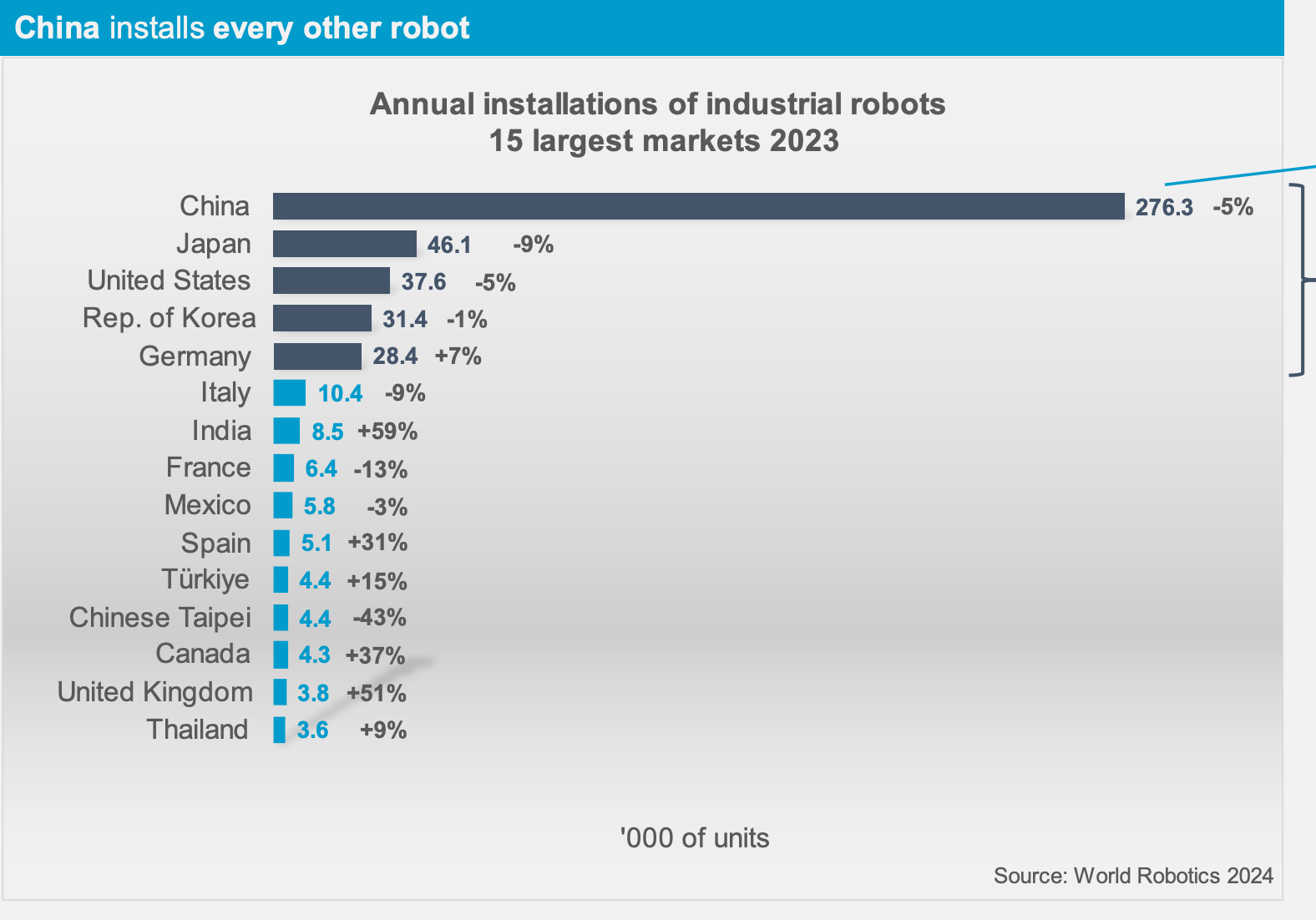
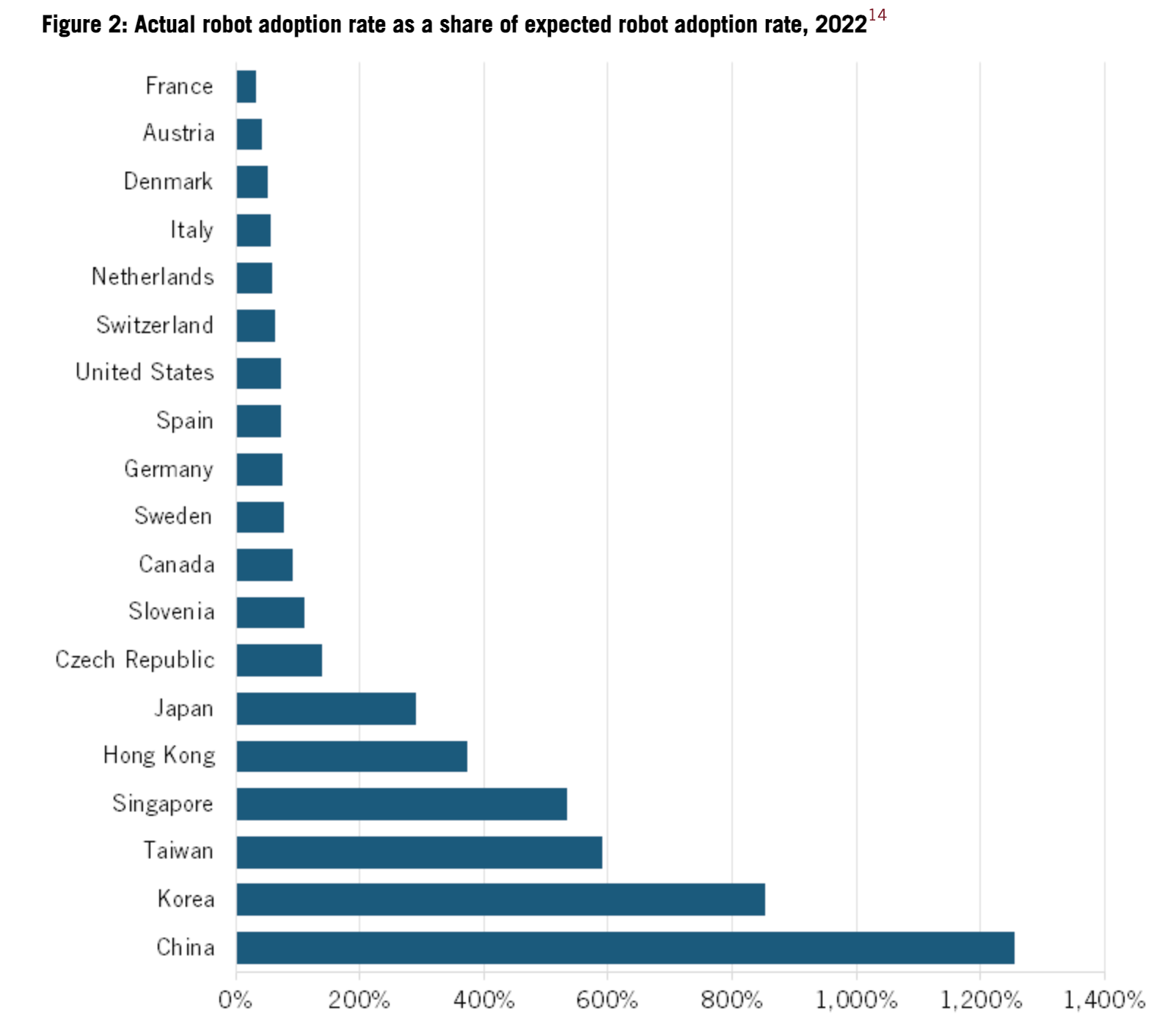
Alt scenario 2: Robots. In this scenario, 2025 was the year of AI…and 2026 will be the year of robots. Rather than U.S. companies seeking to relocate manufacturing to Mexico, they will instead double down on investments in automation, Internet of Things, and robotics in the U.S. This would be a huge shift — China is the biggest installer of industrial robots in the world by far, and as you can see below, the U.S. has lagged behind considerably when it comes to adopting robots.
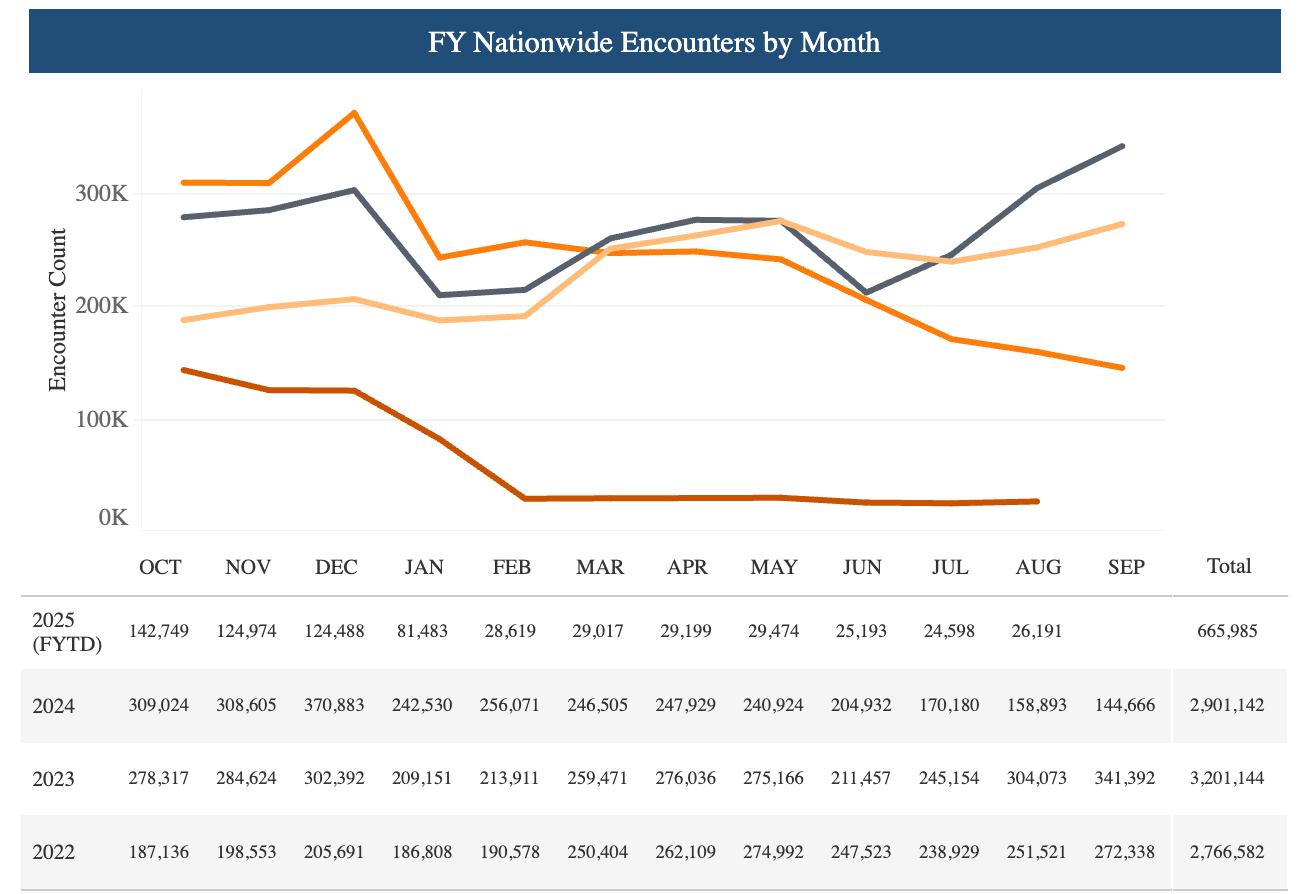
But part of that is driven by the fact that the U.S. has attracted huge numbers of immigrants in recent years. We can argue whether that is good or not and what it means for the character of the nation and legal v illegal immigration until we are blue in the face, but the bigger point is that the Trump administration has effectively shut the border…and that means far fewer immigrants to take jobs than before, which in turn means for the first time in (insert years here), it might make sense for U.S. companies to throw capex at robotics…because there is actually a compelling cost and risk/reward reason to do so.
Of course, these robots could also be deployed…in Mexico. In places where no one lives and where the sun shines most of the day, perhaps. So it is not necessarily invalidating…but the point is if the U.S. focuses on automation rather than near-shoring to Mexico, then I’m wrong here, especially because the U.S. will need to import all sorts of components and other things from Asia to build those robots at scale anyway.
So, to sum up: I was too tough on President Sheinbaum earlier, she is right. Mexico’s tariff move is not really about China. It is about alignment. It is about Mexico signaling hat it intends to be inside the North American economic bloc, not adjacent to it. It is a wager that short-term pain will be rewarded with longer-term access, investment, and relevance as global supply chains fragment along geopolitical lines.
In an environment where most geopolitical signals are ambiguous, hedged, or reversible, this one is conspicuous. Mexico is choosing North America over globalization. The success of that choice will show up in where factories are built, where capital flows, and which trade corridors deepen over the next several years. This is something I have been writing about throughout 2025, most directly in a long-form study on Matamoros as a potential Mexico-U.S. trade gateway, and it will remain one of the central themes to watch in 2026.11
That is also what makes this thesis useful. It is falsifiable. If the USMCA is not renewed in 2026, this analysis is wrong. If North American integration stalls, this analysis is wrong. If China remains embedded in U.S. supply chains through alternative routes, this analysis is wrong. If BYD factories start going up in Alabama in 2026, this analysis is wrong.
But if Mexico’s bet pays off—if production shifts, trade consolidates, and North America hardens into a more coherent economic sphere—then last week’s vote will look, in hindsight, like one of the few developments this year that actually mattered.
Let the record show that I think it will.
This is something I continue to struggle with. To grow my audience, I need to publish more on the Substack…but if I make posts that I don’t truly believe matter, that audience won’t stay, or at least won’t be getting anything special. Advice appreciated.
https://www.wsj.com/economy/trade/china-urges-mexico-to-drop-protectionist-practices-in-tariff-spat-0b606c35?gaa_at=eafs&gaa_n=AWEtsqcCW4w82mWDtfvZEoj0vIIwlA0yiciWOng6QYNY3osaYZNmcmFf88sx-i_gig%3D%3D&gaa_ts=693b6481&gaa_sig=fRF47jj5GQIJyv2iqEk2uUfVeDkx_WOvO_hGg7gzuzpUlI8BH9S3dxiBiiv7GyAc6GztR0p9JckAcq9rQ6US_g%3D%3D
https://www.bloomberg.com/news/articles/2025-12-15/mexico-sees-small-inflation-impact-from-tariffs-on-chinese-goods
https://www.lemonde.fr/en/international/article/2025/11/22/the-ambiguities-of-the-generation-z-movement-in-mexico_6747717_4.html
https://www.gob.mx/sre/en/articulos/mexico-and-china-strengthen-their-political-dialogue-and-strategic-partnership-105793?idiom=en
https://thediplomat.com/2025/11/beyond-trade-chinas-political-power-in-mexico/
https://www.fmprc.gov.cn/eng/gjhdq_665435/3376_665447/3508_665108/
Economies and Politics of (Il)Legality, 1950–2012 p. 38
https://www.whitehouse.gov/fact-sheets/2025/11/fact-sheet-president-donald-j-trump-strikes-deal-on-economic-and-trade-relations-with-china/
https://jacobshapiro.com/wp-content/uploads/2025/09/Matamoros_V2-1.pdf
Great piece! In light of this, what do you think about Carney’s deal with China? Is it carving a completely different path or is it just a tactical deal to get relief for key industries? Doesn’t change the USMCA path at all?