
No Más Mencho
Cartel succession and Mexico’s sovereignty test
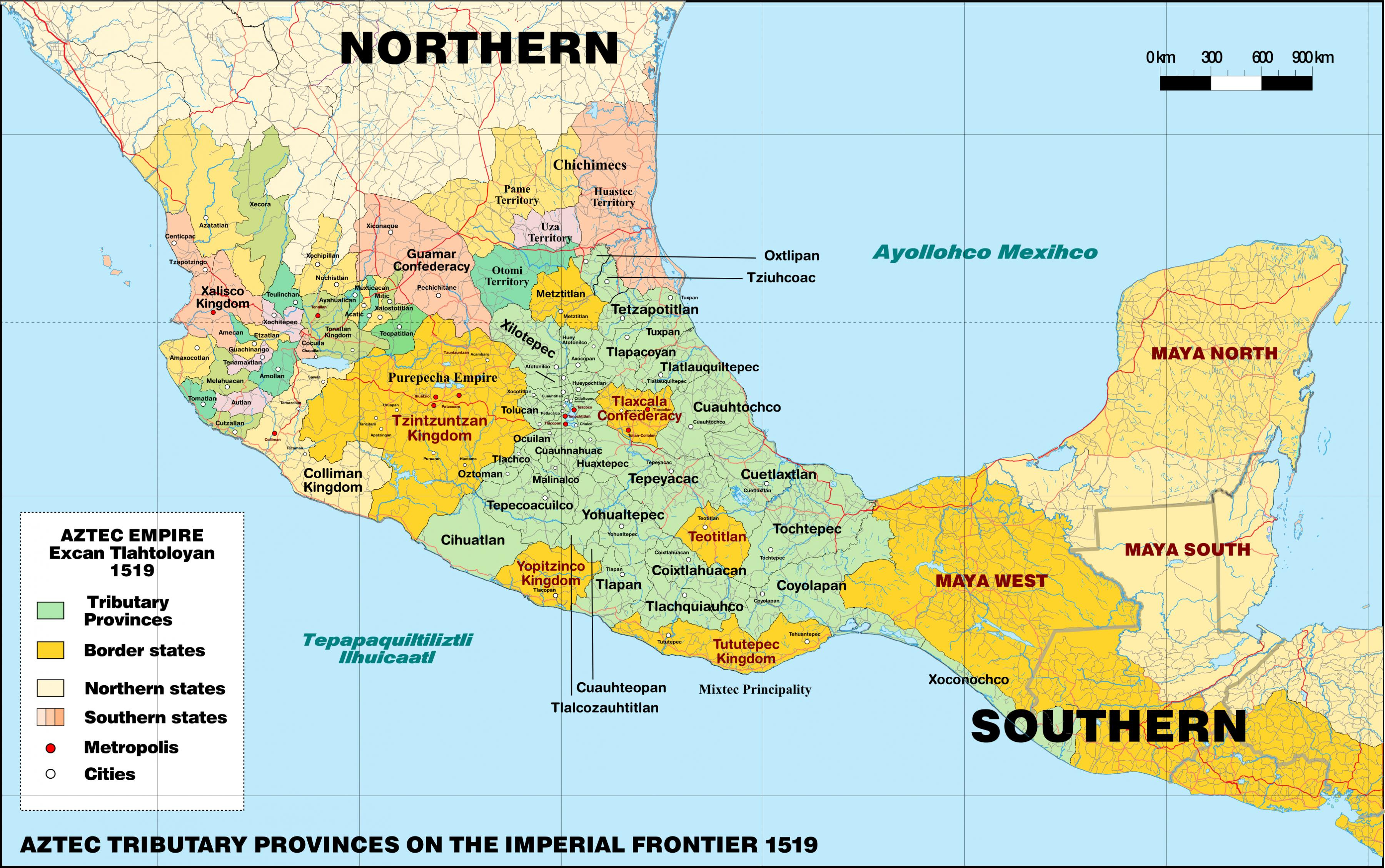
For as long as there has been a Mexico, there have been cartels. Geography is not always destiny, but in Mexico’s case it has been stubbornly close. For centuries, states have tried to impose order on Mexico’s northern frontier. None have succeeded. Power in Mesoamerica always radiated outward from the Valley of Mexico. The Aztecs built their empire there. The Spanish consolidated their rule there. The modern Mexican state governs from there. To the north lies a harsher landscape — arid, mountainous, thinly populated, and historically resistant to centralized control. It never sustained dense, hierarchical civilization in the way central Mexico did. This is the borderland that Aztec rulers raided rather than ruled, that the Spanish could not pacify, that Mexico City has never truly controlled. It is the terrain that made Cormac McCarthy’s writing famous: a vast and violent place defined by its liminality. The cartels did not invent this frontier, but it is from whence they came.
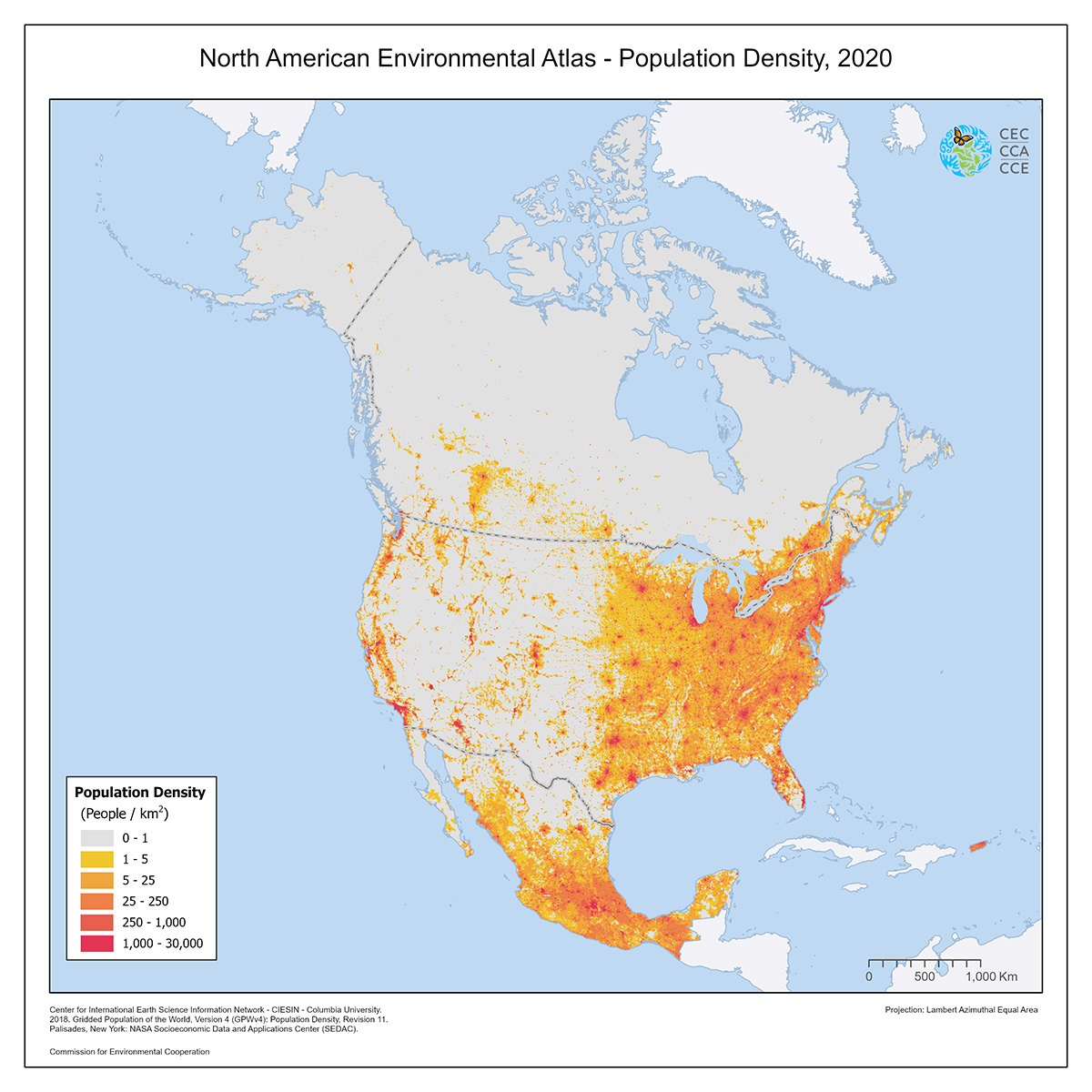
Today’s U.S.-Mexico border cuts across the Sonoran, Chihuahuan, and Baja deserts — vast expanses that are, in many places, only barely habitable.1 The mountain ranges that run through this terrain create pockets of isolation where unrest can simmer for years before spilling outward. Distance from Mexico City is not just measured in miles but in logistics, in supply chains, in the ability to project force. That isolation was one of the reasons Mexico could not hold Texas and the broader American Southwest in the nineteenth century — an inability to control the borderland made Santa Anna’s attempt to control Texas basically impossible. It was one of the structural conditions that fed the upheaval of the 1910-1920 Mexican Revolution. The north is both buffer and fault line: strategic depth against the United States or whatever threatens from the north, but also a source of chronic vulnerability to Mexico City’s writ.
Deserts and mountains provide space. Space creates autonomy. Autonomy leads to the dark side of the force. (Sorry couldn’t help myself.) Autonomy, in weakly governed regions, creates opportunity for dissent, for rebellion, for smuggling, for criminal enterprise. In the 18th century, this was Comanche raiding territory. In the 19th century, then-Mexican leader Benito Juárez created a federal police force known as the Rurales because the pervasive and omnipresent banditry in the area.2 (Spoiler alert: it didn’t work.) In the 20th century, the cartels emerged. And the cartels, just like the Comanche and the bandits, did not remain in the borderlands. The richer and more powerful they became, the more they spread their influence and control and will to dominate into the entire country. Mexico’s inability to maintain sovereignty over its north became an inability to claim sovereignty anywhere, a story that repeats itself over and over in Mexican history, like a sick and twisted Márquez novel. The origins of the cartels are in that structural space between nominal sovereignty and effective control, but they have grown so powerful that they now threaten both.

This is the geopolitical context one needs to understand the assassination of Nemesio Oseguera Cervantes, aka El Mencho, leader of Cártel de Jalisco Nueva Generación (CJNG), one of (if not the most) violent non-state actors to stain the pages of North American history. In recent years, CJNG has expanded aggressively beyond its areas of territorial control, expanding its tentacles into almost every Mexican state. (The country-wide violence that broke out for ~24 hours after his death, as well as the skilled disinformation campaign waged by the cartel to make it seem like the country was falling apart, speak to CJNG’s power and influence.) CJNG paid little attention to the unwritten laws of the unsustainable and volatile relationship between Mexico’s cartels, state, and people. In June 2020, CJNG attempted to assassinate Omar García Harfuch, then Mexico City’s Secretary of Public Security, in a brutal, coordinated attack.3 (It is no coincidence that Harfuch now serves as Mexico’s Security Secretary — arguably no one in Mexico is more familiar with CJNG’s ways than Harfuch.)

Let’s cut to the chase. El Mencho’s assassination is a bfd. But it is not exactly clear to me exactly what kind of bfd it is. We don’t have enough information to decide whether this is an inflection point in the relationship between the Mexican government and the cartels, or whether it will lead to more violence, or whether it is just more of the same. The current iteration of Mexico’s drug cartels emerged in the 1980s. In 2006, facing significant pressure from the U.S., then-Mexican President Felipe Calderón declared war on the cartels. When Calderón declared war on the cartels in 2006, there were roughly six such cartels, each with a defined geography in which they operated. Instead of eliminating these six groups, the Mexican government’s war against the cartels fractured a relatively stable balance of power.4 Mexico failed to eliminate the cartels; it merely disrupted them, creating power vacuums that in turn led to new and more violent splinter groups clashing violent with other splinter groups as they vied for new territory. (CJNG was one of these groups.) It is no coincidence than in the early 2020s, 52 percent of homicides in Mexico occurred in just six states: Guanajuato, Baja California, State of Mexico, Chihuahua, Jalisco and Michoacán, aka, CJNG turf.5
So: Where do we go from here?6 And what doe El Mencho’s assassination mean for Mexico? Here are the three scenarios I’m working from to try and understand what happens next.
This was a targeted move against CJNG specifically, not the opening salvo in a generalized war on Mexico’s cartels. CJNG had become uniquely destabilizing — more violent, more expansionist, and less interested in the tacit arrangements that have historically governed relations among cartels, the state, and local populations. As nearshoring and economic fragmentation create new streams of revenue across Mexico,7 many criminal organizations have incentives to preserve a workable equilibrium. CJNG often appeared uninterested in equilibrium.
I have no evidence for what I am about to say, it is “inference only.” (I like to call this version of my brain Conspiracy Jacob.) Perhaps the Mexican state wasn’t the only actor fed up with CJNG. Maybe Mexico’s other cartels were feeling threatened too. Perhaps they even saw benefit in cutting CJNG down to size. The Sinaloa organization, in particular, has long-standing reasons to want its territory back. Cooperation, or at minimum, tacit understandings between the state and non-state groups (a nice euphemism for cartels ) are not unprecedented in Mexico’s history. If this was a corrective strike designed to rebalance the ecosystem rather than dismantle it, violence will spike in the short term but remain geographically concentrated and then abate. It may also suggest that the Mexican state is warning other cartels not to stand in the way of progress — immense wealth and investment will come Mexico’s way due to nearshoring and geopolitical multipolarity if outsiders aren’t worried about cartels. Maybe other cartels are already on board with this plan and CJNG was a hold out.
The second scenario is more ambitious: that this marks the beginning of a sustained effort to reassert sovereignty in all regions where it has long been diluted. The cartels are powerful, but they are not capable of repelling the Mexican military in a prolonged, coordinated campaign. They certainly could not withstand direct U.S. military involvement if such involvement were invited or imposed. (Based on my own research and experience in Mexico, I am of the opinion that the extent to which U.S. military involvement against the cartels constitutes a true red line for Sheinbaum is overstated. Unsolicited involvement, perhaps…but my sense is the median Mexican voter would be happy for the cartels to learn why the U.S. doesn’t have free healthcare.)

A serious campaign like this would produce an immediate surge in violence but over time it could restore deterrence and shrink the operational space in which these organizations function. That would require political will, institutional coordination, and endurance — all of which have historically proven difficult to sustain, and which make even a soft version of this scenario unlikely (but not impossible).

The third scenario is the most troubling because it is the most familiar. If this assassination is not embedded in a broader, coherent strategy — or if Mexican capacity flags midway through — fragmentation becomes the dominant risk. This is what followed the 2006–2007 campaign under Calderón: major organizations fractured, splinter groups proliferated, territory became fluid, and violence intensified as new actors competed for control. CJNG itself emerged from that environment. Decapitation without consolidation creates vacuums. In Mexico, vacuums do not remain empty for long.
To be clear, I’m not saying these are the only three scenarios. They are also not mutually exclusive, we could see elements of one or all of them coexist. But they are my attempt to try and set up signposts to evaluate what happens next in Mexico. Many variables matter — like whether CJNG consolidates under a single successor or fractures, whether Sheinbaum’s approval ratings hold, whether the U.S. makes a trade deal with China that obliterates the rationale for true nearshoring, and several more I’ve not yet thought of.
I am on record as being bullish on Mexico’s immediate economic future, but that optimism carries a condition: the state’s relationship with non-state actors cannot remain unresolved. Whether through force, through AMLO’s “hugs,” or through some form of co-optation that binds criminal organizations to Mexico’s broader economic ascent, the equilibrium has to shift. Mexico generated real wealth after joining NAFTA in the early 1990s, but its rise was blunted by China’s arrival and the gains from free trade were unevenly distributed; the country absorbed the inequality without fully capturing the upside. (It’s not a coincidence cartel power increased around this time of dislocation.) Nearshoring and multipolar fragmentation are now offering Mexico another opening — its best (and perhaps only) in a generation — to translate geography into durable prosperity. But growth alone does not solve the cartel problem. A rising tide lifts all boats, including cartel boats. If this next wave of opportunity once again produces concentrated wealth without deeper institutional consolidation, criminal organizations will adapt faster than the state. The greatest threat to Mexico’s future is not violence in isolation but another decade of unrealized promise, because in that world CJNG’s wager — that exploiting the system is more rational than accommodating it — will look less like nihilism and more like cold-eyed strategic logic.
For now, at least, the Mexican government is clearly saying to CJNG, and any others that might oppose progress, that unmoderated and unadulterated nihilism and violence will not be tolerated. It’s long overdue, and let’s hope long here to stay.
https://wikileaks.org/gifiles/attach/42/42383_STRATFORMexicoMonograph.pdf
https://www.britannica.com/topic/Rurales
https://www.dni.gov/nctc/terrorist_groups/cjng.html
https://www.brookings.edu/wp-content/uploads/2019/03/FP_20190322_mexico_crime-2.pdf
https://www.gob.mx/cms/uploads/attachment/file/642150/Segundo_informe_Estrategia_Nacional_Seguridad_Publica-comprimido__1_.pdf
hey, do you think we might publish your piece in the Spectator magazine? I’m mary@spectator.co.uk